Table of Contents
Imagine building a life in a new country — a job, an apartment, maybe kids in the local school — only to have your legal right to stay depend on a court hearing you can’t even attend. That is daily reality for over a million people in the United States right now. The program that protects them has a bureaucratic name, Temporary Protected Status, but the stakes behind it are anything but boring.
This guide breaks down what TPS actually is, which countries currently qualify, and why a major Supreme Court ruling in June 2026 just reshuffled the entire program.
What Is Temporary Protected Status?
Temporary Protected Status, or TPS, is a humanitarian immigration benefit created by Congress under Section 244 of the Immigration and Nationality Act. It lets nationals of certain countries stay and work legally in the U.S. when their home country becomes too dangerous to return to.
The Secretary of Homeland Security decides which countries qualify. Three situations trigger a designation:
- Ongoing armed conflict, such as a civil war
- Environmental disaster, like an earthquake or hurricane
- Extraordinary and temporary conditions that prevent safe return
TPS does not hand out green cards. It simply pauses deportation and grants a work permit for as long as the designation stays active. Think of it as a legal timeout, not a finish line.
The Legal Basis, in Plain English
Congress created TPS through the Immigration Act of 1990. Before that, the Attorney General used a looser, discretionary tool called Extended Voluntary Departure. Lawmakers wanted something more structured and predictable, so TPS replaced it.
Since 2017, the authority to designate — or end — a country’s TPS status has rested entirely with the Secretary of Homeland Security. That single detail explains why the program swings so dramatically between administrations. One Secretary’s signature can add a country. The next Secretary’s signature can try to remove it.
Countries With Active TPS Designations (2026)
The list below reflects the countries with an active or litigation-protected TPS designation as of mid-2026. Because terminations, court injunctions, and appeals are moving constantly, always confirm current status directly on USCIS.gov/tps before you rely on it.
| Country | TPS Since | Current Status (Mid-2026) |
|---|---|---|
| El Salvador | 2001 | Extended through Sept. 9, 2026 |
| Ukraine | 2022 | Valid through Oct. 19, 2026 |
| Sudan | 2023 | Valid through Oct. 19, 2026 |
| Lebanon | 2024 | Automatically extended through Nov. 27, 2026 |
| Venezuela (2021 designation) | 2021 | Terminated Nov. 7, 2025; limited exceptions until Oct. 2, 2026 |
| Haiti | 2011 / 2021 | Termination ordered; Supreme Court cleared the way June 25, 2026 |
| Syria | 2012 | Termination cleared by Supreme Court, June 25, 2026 |
| Honduras | 1999 | Terminated Sept. 8, 2025; court fight ongoing |
| Nicaragua | 1999 | Terminated Sept. 8, 2025; court fight ongoing |
| Nepal | 2015 | Terminated Aug. 20, 2025; court fight ongoing |
| Somalia | 1991 | Terminated Jan. 14, 2026; stay in litigation |
| Myanmar (Burma) | 2021 | Terminated Jan. 26, 2026; stayed, but at risk after Supreme Court ruling |
| Yemen | 2015 | Terminated, effective March 3, 2026 |
| South Sudan | 2016 | Termination halted, status disputed |
Sources: USCIS, Wikipedia — Temporary Protected Status, American Immigration Council
At its peak in 2025, TPS covered roughly 1.3 million people from 17 countries, according to the American Immigration Council. That number is shrinking fast.
The Supreme Court Just Changed Everything
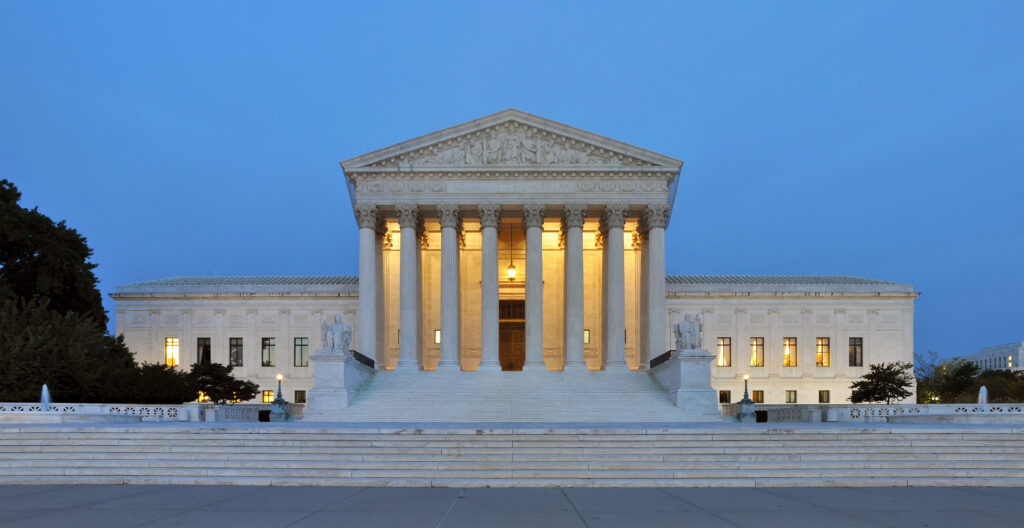
Here is the headline nobody in the TPS world wanted to see: on June 25, 2026, the Supreme Court ruled 6–3 in Mullin v. Doe (consolidated with Trump v. Miot) that the TPS statute largely blocks federal courts from reviewing non-constitutional challenges to a TPS termination.
In practical terms, this ruling did two things:
- It cleared the way for DHS to terminate protections for roughly 350,000 Haitians and 6,000 Syrians, ending the lower-court stays that had kept those designations alive.
- It signaled that courts can no longer act as a safety net for TPS holders from other countries either, since most challenges to a termination decision are now effectively off-limits.
For a program that has survived largely through litigation over the past two years, that is a seismic shift. Lawsuits over Nepal, Honduras, and Nicaragua remain active, but this ruling makes them a much steeper climb for TPS advocates.
Who Actually Qualifies for TPS?
Eligibility comes down to four basic requirements:
- You must be a national of a currently designated country (or a stateless person who last resided there).
- You must have been continuously physically present in the U.S. since the date DHS set for that designation.
- You must show continuous residence since an earlier cutoff date, usually a few months before the designation took effect.
- You must pass a background check. A single felony conviction, or two or more misdemeanors, disqualifies you automatically. So does any involvement in persecution or terrorism.
Short trips outside the U.S. generally will not break your continuous residence, but keep documentation ready — lease agreements, pay stubs, utility bills — in case USCIS asks for proof.
How to Apply: The Step-by-Step Version
- Confirm your country has an open registration or re-registration window in the Federal Register.
- File Form I-821 (Application for Temporary Protected Status).
- File Form I-765 at the same time if you also want work authorization.
- Pay the required fees. As of January 2026, Form I-821 costs $510, Form I-765 adds $560 for first-time applicants, and renewing a TPS-based work permit costs $280, according to the FY2026 USCIS fee schedule.
- Attend a biometrics appointment if USCIS requests one.
- Wait for a decision. Approved applicants receive protection from deportation and, where applicable, a work permit valid for up to the length of the designation.
Fee waivers exist for applicants who can document financial hardship, through Form I-912. Late applications are rarely accepted, so missing a registration window is a genuine risk — not just an inconvenience.
TPS vs. Asylum vs. DACA: Quick Comparison
People often lump these three together. They are not the same thing.
| Feature | TPS | Asylum | DACA |
|---|---|---|---|
| Basis | Country-wide conditions | Individual persecution | Childhood arrival before 2012 |
| Who qualifies | Nationals of designated countries | Any nationality | Specific age/arrival criteria |
| Leads to a green card? | Not directly | Yes, after one year | No |
| Application deadline | Registration window only | Generally within 1 year of arrival | Closed to new applicants |
| Renewable? | Yes, while designation is active | N/A once granted | Yes, historically |
What Happens When TPS Ends?
When a designation ends, a TPS holder reverts to whatever immigration status they held before receiving TPS. For most people, that means returning to undocumented status, along with the risk of removal proceedings. This is exactly why the recent wave of terminations has triggered so much litigation — the consequences are not administrative, they are personal and immediate.
TPS was never designed to be permanent. But for people who have lived in the U.S. for a decade or more under this status, “temporary” has stopped feeling like an accurate word.
TPS by the Numbers
- 1.3 million+ — approximate TPS holders across all designated countries in 2025, per the American Immigration Council
- 860,000+ — TPS holders reported by USCIS for FY2025
- 17 — countries with active TPS designations at the program’s recent peak
- 18 — countries or partial-country designations that have been terminated since TPS began
- $510 — current filing fee for Form I-821, the TPS application
Frequently Asked Questions
Does TPS lead to a green card? No. TPS does not create a direct path to permanent residence or citizenship. Someone with TPS who separately qualifies for a green card through another route, such as marriage to a U.S. citizen, may still apply for that status.
Can I travel outside the U.S. with TPS? Only with prior authorization. TPS holders need Form I-512T, a TPS-specific travel document, before leaving and returning to the U.S.
What did the Supreme Court decide in June 2026? In Mullin v. Doe, the Court ruled that federal courts generally cannot review non-constitutional challenges to a TPS termination. This cleared the way for the government to end protections for Haiti and Syria and weakened legal challenges for several other countries.
What happens if I miss my re-registration window? You risk losing both your TPS protection and your work authorization. Late registration is allowed only for good cause, so contact an immigration attorney immediately if this happens to you.
Is TPS the same as asylum? No. Asylum requires proof of individual persecution and can lead to a green card after one year. TPS is based on general country conditions and does not offer that same path.
Where can I check my country’s current TPS status? Always verify directly at USCIS.gov/tps, since designations, extensions, and court rulings change frequently.
The Bottom Line
TPS sits at the intersection of law, politics, and real human lives, and 2026 has been one of its most turbulent years yet. The Supreme Court’s June ruling did not end the program, but it did strip away much of the legal shield that had kept several designations alive through the courts. For anyone with TPS, or anyone who loves someone who does, the safest habit right now is simple: check official sources often, and do not wait until a deadline is close to act.
Sources
- USCIS — Temporary Protected Status
- Wikipedia — Temporary Protected Status
- American Immigration Council — TPS Overview
- National Immigration Forum — TPS Fact Sheet
- LegalClarity — TPS Countries: Designated List
- Congressional Research Service — Individuals with TPS by State
This article is for general informational purposes only and is not legal advice. Immigration status can change quickly through litigation and federal rulemaking — consult a licensed immigration attorney for guidance on your specific situation.

I am a content creator and SEO-focused writer who shares accurate, easy-to-understand information on government jobs, exams, results, and educational updates to help students make better career decisions.