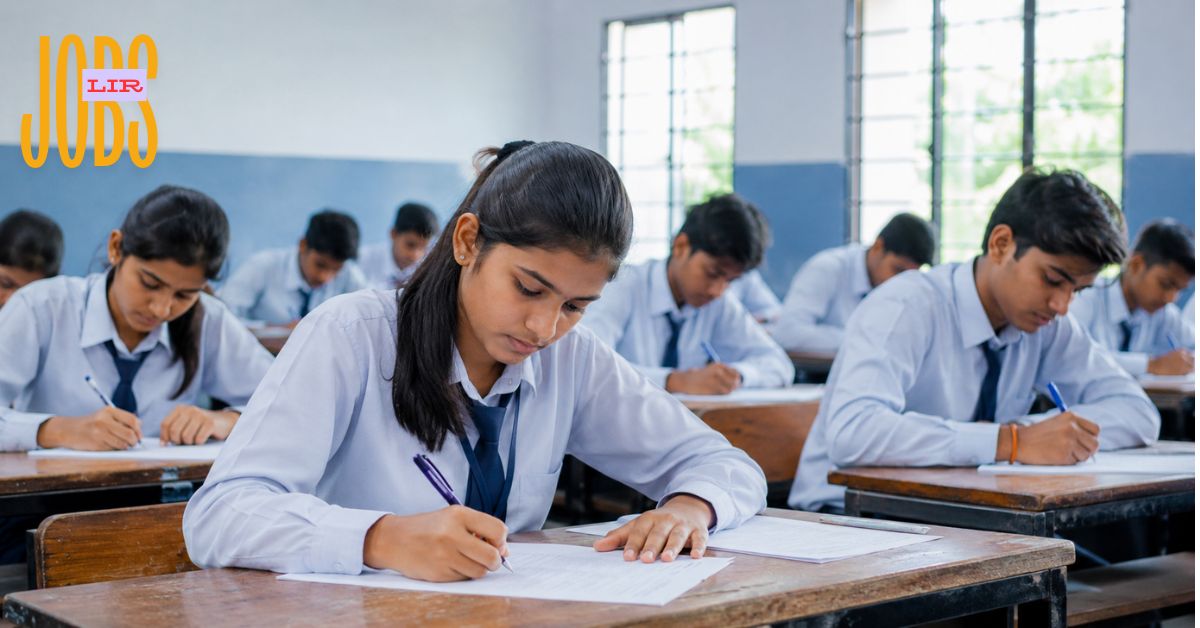
Haryana Board of Education (HBSE) Class 10th Exam 2025 – Everything You Need to Know
Dates · Syllabus · Exam Pattern · Result · Preparation Tips · FAQs – All in One Place
1. What Is the Haryana Board of Education (HBSE)?
The Haryana Board of Secondary Education (HBSE) is the official government body that conducts Class 10 and Class 12 board examinations across the state of Haryana. It was established in 1969 and is headquartered in Bhiwani, Haryana.
Every year, over 5 lakh students appear for the HBSE Class 10 exam. That is a massive number — and yes, it means you are competing with a small city worth of people. But don’t worry. Preparation beats competition every time.
HBSE falls under the School Education Department, Government of Haryana, and operates under the legal framework of the Haryana Board of School Education Act, 1969. The board is responsible for:
- Conducting Class 10 and Class 12 examinations
- Prescribing the syllabus and textbooks
- Issuing mark sheets, certificates, and migration certificates
- Registering students and maintaining academic records
- Conducting open school exams for out-of-school learners
The board conducts the Class 10 exam, also called the Secondary School Certificate (SSC) Examination, typically between February and March each year. Results usually come out in May or June.
HBSE has been modernising steadily. From online admit card downloads to digital mark sheets via DigiLocker, the board is making things easier for students year after year. That said, results can still feel like a surprise birthday — sometimes delightful, sometimes not.
2. HBSE Class 10 – Key Numbers at a Glance
Numbers don’t lie. Here are some important HBSE Class 10 statistics that give you a realistic picture of what the exam looks like from the outside:
These numbers make one thing very clear — the Haryana Board 10th exam is large-scale, competitive, and taken seriously. The average pass rate of around 70% also means roughly 3 out of every 10 students do not clear it in one shot. Preparation is not optional — it is the only option.
3. HBSE 10th Exam Dates & Timetable 2025
The HBSE Class 10 board exam 2025 was scheduled and conducted in February–March 2025. The board typically releases the official timetable 2–3 months before the exams begin. Students must check the official HBSE website for the exact schedule each year.
Below is a representative exam timetable based on the pattern followed by HBSE in recent years. The actual 2025 dates may vary slightly:
| Date | Subject | Exam Time | Duration |
|---|---|---|---|
| 27 Feb 2025 | Hindi | 12:30 PM – 3:30 PM | 3 Hours |
| 1 Mar 2025 | English | 12:30 PM – 3:30 PM | 3 Hours |
| 4 Mar 2025 | Mathematics | 12:30 PM – 3:30 PM | 3 Hours |
| 7 Mar 2025 | Science | 12:30 PM – 3:30 PM | 3 Hours |
| 10 Mar 2025 | Social Science | 12:30 PM – 3:30 PM | 3 Hours |
| 13 Mar 2025 | Sanskrit / 3rd Language | 12:30 PM – 3:30 PM | 3 Hours |
| 17 Mar 2025 | Computer Science (if opted) | 12:30 PM – 3:30 PM | 3 Hours |
| 20 Mar 2025 | Drawing & Painting (if opted) | 12:30 PM – 3:30 PM | 3 Hours |
Most exams start at 12:30 PM, so students need to report to the examination centre by 11:30 AM at the latest. Arriving late can cause unnecessary stress — and board exam halls don’t exactly appreciate a dramatic entrance after the bell.
4. Exam Pattern and Marking Scheme
Understanding the exam pattern is half the battle. HBSE Class 10 follows a structured marking system that balances theory and internal assessment.
| Component | Marks | Type |
|---|---|---|
| Theory (Written Exam) | 80 Marks | Annual Board Exam |
| Internal Assessment | 20 Marks | School-Level |
| Total Per Subject | 100 Marks | — |
| Total (5 Subjects) | 500 Marks | — |
| Minimum Pass Marks (Each Subject) | 33 out of 100 | — |
| Minimum Pass Marks (Theory Alone) | 26.4 out of 80 | Approx. |
What’s Inside the 80-Mark Theory Paper?
| Question Type | Marks | Nature |
|---|---|---|
| Objective / MCQ Questions | 20 Marks | 1 mark each |
| Very Short Answer (VSA) | 12 Marks | 2 marks each |
| Short Answer (SA) | 18 Marks | 3 marks each |
| Long Answer (LA) | 30 Marks | 5–6 marks each |
| Total | 80 Marks | — |
Internal Assessment Breakdown (20 Marks)
- Periodic Tests / Unit Tests: 10 Marks
- Notebook Submission / Portfolio: 5 Marks
- Subject Enrichment Activities: 5 Marks
Internal assessment marks are given by your school. While these 20 marks feel “free,” do not take them lightly. In a close result, internal marks can make the difference between a D grade and a B grade.
5. Subject-Wise Syllabus Overview
HBSE Class 10 syllabus follows the NCERT framework with some Haryana-specific additions. Here is a clean breakdown of what to expect in each core subject:
📘 Mathematics
| Unit | Topics | Weightage (Approx.) |
|---|---|---|
| Number Systems | Real Numbers | 6 Marks |
| Algebra | Polynomials, Quadratic Equations, AP | 20 Marks |
| Coordinate Geometry | Lines, Distance Formula | 6 Marks |
| Geometry | Triangles, Circles, Constructions | 15 Marks |
| Trigonometry | Ratios, Heights & Distances | 12 Marks |
| Mensuration | Areas, Volumes, Surface Areas | 10 Marks |
| Statistics & Probability | Mean, Median, Mode, Probability | 11 Marks |
🔬 Science
- Physics: Light, Electricity, Magnetic Effects of Current, Sources of Energy
- Chemistry: Chemical Reactions, Acids & Bases, Metals & Non-Metals, Carbon Compounds, Periodic Table
- Biology: Life Processes, Reproduction, Heredity, Our Environment, Natural Resources
🌍 Social Science
- History: Nationalism in Europe, Nationalist Movement in India, Age of Industrialisation, Print Culture
- Geography: Resources, Forest & Wildlife, Water Resources, Agriculture, Minerals, Manufacturing, Transport
- Civics (Political Science): Power Sharing, Federalism, Democracy, Political Parties, Outcomes of Democracy
- Economics: Development, Sectors of Economy, Money & Credit, Globalisation, Consumer Rights
📖 Hindi (Course A)
- Kshitij – Prose and Poetry (Chapters 1–17)
- Kritika – Supplementary Reader
- Grammar: Rasa, Alankar, Samaas, Sandhi, Letter Writing, Essay
🗣 English (Communicative)
- First Flight – Prose and Poems
- Footprints Without Feet – Supplementary Reader
- Writing Skills: Formal Letter, Article, Story, Notice
- Grammar: Tenses, Reported Speech, Modals, Determiners
6. Pass Percentage & Historical Trends
The pass percentage in HBSE Class 10 exams has fluctuated over the years. Understanding the trend helps you see where the board stands and what kind of effort is needed to be in the top tier.
2021 was a special case — HBSE awarded mass promotions due to the COVID-19 pandemic. Real exam-based results typically hover between 65% and 75%.
Girls vs Boys – Who Performs Better?
Historically, girls outperform boys in HBSE Class 10 exams. This is a consistent national trend seen across most state boards as well. In the 2024 results, girls recorded a pass percentage of approximately 76%, while boys recorded around 69%.
| Year | Girls Pass % | Boys Pass % | Overall |
|---|---|---|---|
| 2022 | 78.3% | 70.1% | 74.12% |
| 2023 | 74.5% | 63.8% | 68.98% |
| 2024 | 76.1% | 68.7% | 72.34% |
The data clearly shows that consistent effort and disciplined study habits — qualities more common in regular female students — make a real difference. Whether you’re a boy or a girl, the takeaway is simple: start early, study consistently.
7. How to Check HBSE 10th Result 2025
HBSE declares Class 10 results typically in May or June of the same year the exams are conducted. The result is published on the official HBSE website and several other platforms simultaneously.
Step-by-Step: Check Your Result Online
- Visit the official website: bseh.org.in
- Look for the “Results” section on the homepage
- Click on “HBSE 10th Result 2025”
- Enter your Roll Number as printed on your Admit Card
- Click Submit and view your result
- Download and save the scorecard as a PDF
- Take a printout for your records
Alternative Ways to Check Results
| Method | How It Works |
|---|---|
| Official Website | bseh.org.in → Results section |
| DigiLocker | Login at digilocker.gov.in → Issued Documents → HBSE |
| SMS | Send HBSE10 ROLLNUMBER to 56263 |
| IVRS Call | Check HBSE helpline numbers |
| Third-Party Sites | indiaresults.com, examresults.net |
What Documents Come After the Result?
- Provisional Marksheet: Available online, right after result declaration
- Original Marksheet: Issued by HBSE and distributed via schools
- Passing Certificate: Provided to students who clear all subjects
- Migration Certificate: Required if you move to a school or board outside Haryana
8. Smart Preparation Strategy (Month-by-Month)
Preparing for HBSE Class 10 exams is not about studying harder — it is about studying smarter. Here is a realistic, month-by-month plan that actually works:
June – August: Build the Foundation
Cover the NCERT syllabus chapter by chapter. Don’t rush. Make short notes as you go. Focus on understanding, not memorising. Pay extra attention to Mathematics and Science.
September – October: Deep Dive
Revisit difficult chapters. Start solving the NCERT exercises at the end of each chapter — these are often the base for board questions. Attempt your school’s unit tests seriously.
November – December: Practice Mode ON
Shift to solving previous year question papers. Identify your weak areas. Set timers while solving papers to build speed. Practice answering in proper board exam format.
January: Mock Tests & Revision
Attempt at least 2 full-length mock tests per week. Review errors carefully. Revise your short notes. Focus on chapters with high weightage first.
February (Before Exams): Light Revision
No new topics. Only revision. Focus on formulas, dates, definitions, and diagrams. Ensure 7–8 hours of sleep every night. Stress management is as important as revision at this stage.
Subject-Specific Study Tips
Mathematics – Practice Every Day
Mathematics is the most scoring subject in Class 10 — if you practice daily. Solve at least 10 problems every day. Don’t just read solutions; write them out yourself. Focus on Algebra and Geometry, which carry the highest marks.
Science – Diagrams Save Marks
In Science, drawing neat, labelled diagrams can get you extra marks even if your written answer is slightly incomplete. Practice drawing circuit diagrams, eye diagrams, and plant/animal cell diagrams regularly.
Social Science – Don’t Just Mug Up
Social Science has a vast syllabus. Creating chapter-wise timelines for History, and concept maps for Geography, makes revision much faster. Focus on NCERT in-text questions for Civics and Economics.
Hindi – Grammar Is Your Friend
In Hindi, grammar (vyakaran) carries predictable marks. Topics like Ras, Alankar, Sandhi, and Samaas are repeated every year. Master these and you already pocket 15–20 marks easily.
English – Read the Passages Twice
In English, the unseen passage can confuse you if you rush. Always read the passage twice — first for overall understanding, then for specific answers. In writing tasks, maintain proper format (letter, article, etc.).
Best Books for HBSE Class 10
| Subject | Primary Book | Reference Book |
|---|---|---|
| Mathematics | NCERT Class 10 Maths | RD Sharma / RS Aggarwal |
| Science | NCERT Class 10 Science | Lakhmir Singh & Manjit Kaur |
| Social Science | NCERT (4 books) | Arihant All-in-One SST |
| Hindi | Kshitij + Kritika (NCERT) | Arihant Hindi Guide |
| English | First Flight + Footprints | Together With English |
9. Admit Card – When & How to Download
The HBSE Class 10 admit card is one of the most important documents a student needs. Without it, you cannot enter the examination hall — full stop. No admit card, no exam. The examiners are not known for their flexibility on this one.
HBSE usually releases admit cards 2–3 weeks before the exams begin. For a February exam, expect the admit card in early-to-mid January.
How to Download the HBSE 10th Admit Card
- Visit bseh.org.in
- Go to the “Admit Card” section
- Select “Secondary (Class 10) Admit Card 2025”
- Enter your Registration Number and Date of Birth
- Download and print the admit card on A4 paper
Details on the Admit Card
- Student’s full name and photograph
- Roll number
- Date of birth
- School name and code
- Examination centre address
- Subject-wise exam schedule
- Important instructions
10. Grading System & What Your Marks Mean
HBSE follows a grade-based marking system for Class 10 results. This helps students understand their performance level in a standardised way. Here is how the grading works:
| Marks Range (%) | Grade | Grade Point | Performance Level |
|---|---|---|---|
| 91 – 100 | A1 | 10 | Outstanding |
| 81 – 90 | A2 | 9 | Excellent |
| 71 – 80 | B1 | 8 | Very Good |
| 61 – 70 | B2 | 7 | Good |
| 51 – 60 | C1 | 6 | Average |
| 41 – 50 | C2 | 5 | Below Average |
| 33 – 40 | D | 4 | Passed (Minimum) |
| Below 33 | E (Fail) | — | Failed |
CGPA (Cumulative Grade Point Average) is calculated by taking the average of all subject grade points. Most Class 11 admissions in good schools look for a CGPA of 7.0 and above (i.e., B2 grade or higher).
11. Compartment Exam – A Second Chance
Did not clear one or two subjects? Don’t lose hope. HBSE offers a Compartment Examination for students who fail in up to 2 subjects. This is your second chance to clear the board exam without losing an entire year.
Who Is Eligible for the Compartment Exam?
- Students who fail in 1 or 2 subjects in the main board exam
- Students who were absent in a subject due to a valid medical or emergency reason
Compartment Exam Schedule
The HBSE Compartment Exam is typically held in July–August, approximately 2 months after the main results. The schedule is announced on bseh.org.in after the results are out.
Important Points
| Aspect | Details |
|---|---|
| Subjects Allowed | Up to 2 failed subjects |
| Form Submission | Online through school or HBSE portal |
| Exam Fee | ₹300–₹500 per subject (approx.) |
| Pass Marks Required | 33 out of 100 (same as main exam) |
| Result | Usually within 4–6 weeks of the exam |
| Certificate | Students get a combined certificate after clearing all subjects |
12. Trusted External Links & Official Resources
All the information in this article comes from credible, official sources. Here are the most important links every HBSE Class 10 student must bookmark:
🔗 Official & Trusted Resources
- 🏛️ HBSE Official Website: https://bseh.org.in – Timetables, results, admit cards, syllabus
- 📚 NCERT Official Website: https://ncert.nic.in – Free NCERT textbooks and solutions
- 🎓 DigiLocker (Results & Marksheets): https://digilocker.gov.in
- 🏫 School Education Haryana: https://schooleducationharyana.gov.in
- 📊 India Results (Real-Time Result Updates): https://www.indiaresults.com
- 📖 CBSE Sample Papers (Comparative Reference): https://cbseacademic.nic.in
13. FAQs – Frequently Asked Questions
Here are the most commonly asked questions about the HBSE Class 10 exam, answered clearly and honestly:
Final Thoughts
The HBSE Class 10 exam is a big deal — no one is going to pretend otherwise. But it is also one of the most manageable challenges you will face, simply because the syllabus is structured, the exam pattern is consistent, and the resources are all freely available.
The students who score well are not necessarily the most brilliant. They are the most consistent. They start early. They practice with old papers. They take their school tests seriously. And they sleep on time — which is genuinely underrated advice.
Whether you’re aiming for an A1 grade or just trying to clear all subjects with confidence, the approach is the same: understand the concepts, practice regularly, and don’t leave anything for the last minute.
Good luck with your HBSE 10th exam. You’ve got this. 🎯

I am a content creator and SEO-focused writer who shares accurate, easy-to-understand information on government jobs, exams, results, and educational updates to help students make better career decisions.